
Understanding torsion and extension garage door springs is essential for any homeowner aiming to maintain a reliable and safe system, especially when planning a garage door repair. These springs manage most of the lifting force required to raise and lower a door that can be very heavy, allowing the mechanism to operate smoothly with the support of quality parts. When a spring becomes damaged or fails, the issue goes beyond inconvenience. It creates serious concerns for your home’s security and the door’s overall performance.
Understanding the differences between torsion and extension springs enables you to choose the most suitable option for repair or replacement, considering factors such as durability, balance, and long-term functionality. Making an informed choice also reduces unnecessary wear on your opener, since the right springs distribute tension correctly and help the system run efficiently. With proper selection and maintenance, your garage door operates safely and reliably for years to come.
Garage Door Springs Explained: The Essentials for Naperville Homeowners
Have you ever wondered who handles the demanding work within your garage door system? The garage door springs manage that effort. These essential parts support the full weight of the door, allowing it to move smoothly during operation. Whether you open it manually or use a garage door opener, the springs supply the controlled tension needed for efficient movement. When upgrading or planning for a new garage door, understanding how these springs function becomes even more valuable.
For Naperville homeowners, a damaged spring can interrupt your entire day. Understanding how these springs work helps you identify issues early, ensuring timely service before additional parts are affected. Quick garage door repair also protects the entire system from becoming damaged, allowing your setup to operate safely and effectively.
To delve deeper into the technical aspects of spring function, the blog “The Mechanics Behind Torsion and Extension Springs for Modern Garage Doors” offers valuable additional insight.
Why Garage Door Springs Matter in Everyday Use
Garage door springs manage most of the demanding work within any residential garage door system. These essential parts support the full weight of the door, which can be extremely heavy. When a spring stops functioning correctly, the opener cannot lift the door, forcing the motor to overwork and wear out early. Quality springs ensure steady movement and stop the door from slamming shut, helping reduce the chance of an injured homeowner and preventing damage to stored belongings.
Garage door springs constantly stretch and carry significant tension, so they naturally wear out over time. You may need a spring repair if you hear a sharp bang inside the garage, or if the door appears uneven or difficult to lift by hand. Even a visible gap in the coils signals a clear issue that requires immediate attention. In some cases, these symptoms may indicate the need for broken spring repair to restore safe operation.
When these problems appear, contacting a trained garage door expert is the safest choice. Attempting to operate a door with a damaged spring can cause severe harm to the tracks, panels, or opener. What begins as a simple spring-related issue can quickly become a much larger and more expensive repair if addressed late.
For homeowners wanting to understand why balance and tension matter, the blog “How Spring Design Influences Garage Door Balance, Durability, and Safety” offers an excellent breakdown.
Torsion vs Extension: An Overview of the Main Types
When you inspect garage doors, it becomes clear that not all springs function in the same way. The two primary types used in a garage door system are torsion springs and extension springs. The correct choice depends on the size, weight, and overall design of your door.
Torsion springs sit above the door, spanning from side to side. They use twisting force to lift the door with balanced, controlled movement. These springs are commonly used on heavier and more modern doors because they offer smooth performance and enhanced durability. Extension springs, often found on lighter or older doors, run along each side of the tracks. They stretch and contract to support lifting the door. Single-panel doors frequently use this style.
Selecting the correct spring type requires considering lifespan, safety, and cost. Torsion springs generally last longer and are widely regarded as the safer, more reliable option. Extension springs remain a cost-effective choice that works well with specific door configurations.
This technical resource from the Springs & Things Blog breaks down how springs work, making it easier to understand balance, tension, and safety.
If you’re comparing both systems and want more profound clarity, the blog “Comparing Spring Performance to Determine the Right System for Your Garage Door” is a helpful resource.
How Modern Garage Doors Depend on the Right Spring System
Many modern garage doors include insulation, windows, and decorative features, which add substantial weight. This additional weight places more pressure on the spring system, making the proper selection and professional garage door installation essential for long-term safety and efficient performance. Using a spring that is undersized or not designed for your door can cause early failure and increase tension on other parts of the system.
If a spring breaks, the door may stop opening or closing entirely. This can trap your vehicle inside or leave your home at risk. Every spring is rated for a specific number of cycles, with one cycle representing one full open and close. Torsion springs typically last 8 to 15 years, while extension springs last around 7 to 12 years, averaging 10,000 to 20,000 cycles.
Choosing a spring system that matches your door’s weight and usage level is not optional—it is necessary. A professional garage door technician can determine the system that best fits your needs, helping your door operate smoothly, last longer, and avoid unexpected failures.
This comparison from Chaoyi Spring Blog explains the mechanical differences between various spring systems and guides on selecting the right one.
The Mechanics Behind Torsion and Extension Springs for Modern Garage Doors
Knowing how each spring type works helps you understand the differences in safety, balance, and performance. Both torsion springs and extension springs make a garage door feel lighter during lifting, but they operate in entirely different ways. When you understand these differences, you can select the correct option for a garage spring replacement that fits your system’s needs.
Understanding the Functionality of Torsion Springs
A torsion spring does not stretch; it twists to function. It sits on a metal shaft above the garage door. As the door closes, cables attached at each lower corner pull on the spring, causing it to twist and store energy. When you open the door, either manually or with an opener, the spring releases that energy. As it untwists, it rotates the shaft, which pulls the cables upward and lifts the door. This creates smooth, balanced movement.
This balanced operation reduces unnecessary tension on the opener and other parts. When a torsion spring becomes damaged, it usually stays on the shaft, which is considered safer. Because these parts store significant tension, any garage spring repair involving torsion springs should always be handled by a trained technician.
How Extension Springs Work and Where They’re Used
Extension springs operate by stretching. They are positioned along the sides of the tracks on many garage doors. When the door closes, the springs stretch and store energy. When the door opens, the springs release that energy by pulling back to their normal length, assisting in lifting the door. Older single-panel tilt-up doors commonly use them, and some lighter sectional doors do as well.
Extension springs are often less expensive during a garage spring replacement, making them a popular choice for budget-conscious homeowners. However, their movement is not as balanced as torsion systems. Because they stretch tightly when the door is closed, a damaged extension spring can snap back with strong force, which is why safety cables are always recommended. These cables help keep the spring contained in the event of a failure, reducing the risk of injury to anyone nearby.
Common Issues That Affect Both Types: Identifying a Broken Spring
All garage door springs wear down over time, eventually breaking as their cycle life comes to an end. When a spring breaks, it often happens suddenly and can create a loud bang. Some homeowners describe the sound as similar to a firecracker. This noise results from the spring releasing all stored tension at once and is a clear sign that you need immediate broken spring repair.
There are additional signs that indicate a damaged spring and the need for garage door repair. Recognizing these issues early helps preserve safety and prevent further harm to your system. Watch for these indicators:
- A visible gap: A torsion spring with a gap of about two inches between the coils is broken.
- The door will not open: The opener may run, but the door remains still because the springs cannot assist in lifting it.
- The door drops quickly: If the door closes too fast, the springs are no longer able to hold proper balance.
If you notice any of these issues, stop using the door immediately. Contact a technician who provides garage spring replacement or spring repair to avoid further damage and restore safe operation.
How Spring Design Influences Garage Door Balance, Durability, and Safety
The design of your garage door springs does far more than lift the door—it plays a central role in how the entire system operates. The correct spring keeps the garage door balanced, supports long-term performance, and strengthens essential safety features. Choosing the wrong spring can cause repeated issues over time, often leading to more frequent garage door repairs.
To make the proper selection for your home, it’s helpful to understand how spring design influences balance, durability, and safety. With this knowledge, you can select a repair system that operates smoothly, withstands long-term use, and maintains dependable performance.
Balancing Your Garage Door for Smooth Operation
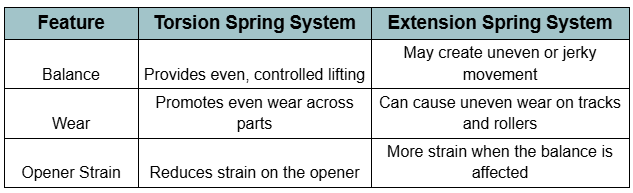
Proper garage door balance is crucial for smooth and efficient operation. When a door is balanced correctly, the springs handle nearly all of the lifting effort, allowing the door to move with only minimal force. This balance reduces tension on the opener, helping extend its lifespan and minimizing the need for early garage door repair. An unbalanced door forces the opener to work harder, increasing the likelihood of motor failure.
How does balance influence performance? A well-balanced door operates quietly and moves with steady motion. An unbalanced door may become loud, uneven, or tilt as it opens and closes. You can check the balance by disconnecting the opener and lifting the door halfway—if it stays in place, it is balanced. If it rises or drops, the springs require adjustment, and this job should always be left to a trained professional.
While regular maintenance supports proper balance, your initial spring selection also plays a significant role in long-term operation.
Safety Features Built into Garage Door Spring Systems
Garage door safety is essential because the springs hold a significant level of pressure. Manufacturers incorporate important safety features to help reduce risk, although the level of protection varies depending on whether torsion or extension springs are used. Torsion springs are widely considered safer because they are mounted on a shaft above the door, allowing for a more secure installation. If one breaks, the coils typically remain contained on the shaft, preventing loose parts from flying across the garage and reducing the risk of injury to anyone.
Extension springs are not as safe when they break. For this reason, having proper safety features installed is critical. When you contact a garage door service and hire trained technicians, they will always check that these safety measures are in place:
- Safety Cables: Installed through the center of extension springs to keep broken pieces contained.
- Contained Coils: Torsion springs remain secured to the shaft even if they fail.
- Professional Installation: The safest approach is always to let an expert install and service high-tension springs.
Having these systems installed correctly helps protect your home, family, and anyone nearby.
Durability Factors that Impact Long-Term Garage Door Spring Performance
The lifespan of a garage door spring depends on how many cycles it can handle before a garage spring replacement becomes necessary. Standard springs typically last around 10,000 cycles, while high-cycle springs can last 20,000 or more. These longer-lasting options cost more upfront but offer extended reliability.
Spring type also affects performance. Torsion springs generally last longer, averaging 8 to 15 years, because their design distributes tension evenly. Extension springs usually last 7 to 12 years due to the way they stretch during operation. Material quality also plays a significant role—springs made from high-quality steel resist rust and damage, helping to reduce unexpected failures and save money over time.
When selecting the best spring for your garage door, consider durability, budget, and expected usage. Regular maintenance, including applying proper lubrication to limit friction and reduce corrosion, also helps extend the life of your spring system.
Understanding the differences between torsion and extension springs is essential for maintaining a safe and efficient garage door system. Understanding how each spring operates, its design’s influence on balance, and its expected lifespan helps you make an informed decision for your home. By comparing performance, durability, and safety features, you can confidently select the spring system that supports long-term reliability and smooth operation.
BSD Garage Door is committed to delivering high-quality installation, maintenance, and repair services, all of which are handled by trained professionals. Our team has the experience to service your torsion and extension springs with precision and care, ensuring your system remains dependable year-round. For trusted support with your garage door, book online today or call us to learn how we can help keep your system operating safely and efficiently.
Frequently Asked Questions
The cost of garage door spring repair in Naperville depends on the type of spring and the labor required for the repair. Extension springs usually cost less to replace than torsion springs. The final price may also vary based on the complexity of the job and whether additional garage door parts require service or replacement.
Common signs include hearing a sharp snapping noise, seeing a visible gap in the spring, or feeling that the door is heavy. You may also notice the door hanging unevenly. If the door will not open or it closes too quickly, these are clear indicators that you need professional garage spring repair or replacement.
Trying to perform your own garage spring repair is extremely risky due to the strong tension stored in the springs. It is not recommended and can be unsafe. For your protection, always contact trained garage door technicians. They have the proper tools and experience to perform garage door service correctly, ensuring that no one is injured during the process.
Torsion springs sit above the garage door and use torque to lift it, offering better balance and a longer lifespan. Extension springs are mounted along the sides of the door and lift it by stretching. The best spring type depends on your specific garage door system and design, and the right choice affects performance and cost.
A typical garage spring repair takes between 30 and 60 minutes. The timeframe may change depending on the type of spring or if the technician finds additional issues, such as cables that require replacement. Skilled garage door technicians complete the work efficiently, prioritizing safety at all times.
When selecting a garage door repair company, look for experienced technicians with proper insurance. Check online feedback to gain insight into their reputation. Request clear quotes that outline pricing for each part, and ensure they offer warranties on both labor and materials. A dependable garage door service company will have transparent pricing and strong local reviews.
Garage door springs typically last between 10,000 and 20,000 cycles. This usually ranges from 8 to 15 years for torsion springs and 7 to 12 years for extension springs, depending on the frequency of door use. Regular maintenance can extend the lifespan of a spring, but a garage spring replacement will eventually be necessary for every system.
If you wait to do a garage spring repair after the spring breaks, it can cause more problems. The garage door opener will have to work harder, which can cause its motor to overheat and potentially burn out. You might also get damage to the door panels, tracks, and cables. Then you could end up paying a lot more for repairs than you would for a simple garage spring replacement.
Choosing the correct extension springs requires matching them to the door’s weight and height. The color markings on each spring show its lifting capacity. It is best to have a professional select and install these springs to ensure the system stays safe and balanced, helping you avoid unnecessary door repair in the future.
No, you should never open a garage door with a broken spring. Without the spring supporting the weight, the door becomes extremely heavy. Trying to lift it manually may cause injury, and using the opener can damage its motor and other components. This often leads to costly repairs, so it is best to leave the door closed and call a professional.
