
The springs in your garage door system handle most of the work every time the door moves, managing the tension that allows it to open and close safely. Because these springs carry such a heavy workload, their performance plays a significant role in your door’s reliability, long-term durability, and overall safety, especially when you need garage door repair to address sudden issues. Homeowners can select from torsion springs or extension springs, and understanding how each one functions helps you make informed decisions about your garage door’s long-term performance. The proper spring setup ensures smoother operation, reduced wear on moving parts, and consistent balance throughout every cycle.
Comparing how both spring systems perform allows you to choose a solution that supports your garage door’s design, daily use, and long-term value. By understanding their differences, strengths, and limitations, you’ll be better equipped to select a system that delivers stable operation and dependable performance for years.
Understanding Garage Door Springs in Naperville
For many homes in Naperville, the garage door relies on either torsion springs or extension springs to safely lift and lower the door. These springs hold a significant amount of tension because they must counterbalance the door’s weight, whether it is opened manually or with a garage door opener. This tension plays a significant role in long-term performance, whether you’re maintaining an existing door or planning for a new garage door installation.
Understanding how torsion and extension springs differ helps you identify early issues and prepare for a possible garage spring replacement. When a spring weakens or fails, the entire system becomes unstable, making the door unsafe to operate. In most situations, contacting a garage door repair professional is the safest approach, especially when the problem involves high-tension parts.
For a deeper comparison of both systems, explore our guide, “Understanding Torsion and Extension Garage Door Springs and Choosing the Best Option.”
Overview of Torsion and Extension Springs
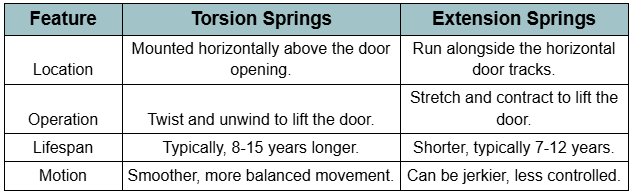
So, what is the main difference between these two types of springs? Torsion springs are usually installed on a metal shaft right above the garage door opening. They work by twisting and then unwinding, creating a controlled force that helps lift and lower the garage door in a smooth, steady motion. This design enables balanced and consistent operation throughout each cycle.
Extension springs function differently. They are installed on each side of the door and stretch along the tracks. These springs store energy by extending when the door closes and release that energy as they contract when the door opens. Because they rely on stretching and contracting, their movement can feel quicker and less controlled than torsion systems.
The way these springs operate affects factors such as lifespan, maintenance, and the smoothness of your garage door opener’s performance. Both types will raise and lower the door, but the spring system you select will influence how long your equipment lasts and how effectively it handles daily use. When these springs begin to weaken, a homeowner may eventually need broken spring repair to restore safe and reliable function.
If you want a closer examination of how each spring system operates, read “The Mechanics Behind Torsion and Extension Springs for Modern Garage Doors.”
How Garage Door Springs Affect System Performance
The springs are the heart of your garage door system, playing a crucial role in how well the door operates every day. When the springs are matched correctly to the door’s weight and installed with proper tension, the door remains balanced. This balance reduces the strain on the garage door opener, allowing the motor to work more efficiently and last longer.
If the springs weaken or fail, the opener must lift the entire weight of the door on its own. This can lead to early motor damage, noisy operation, and frequent door repair or spring replacement. Common signs that you may need a garage spring replacement include a door that feels heavy when manually lifted, uneven movement as it rises, or screeching and grinding sounds during operation.
Choosing the correct spring system helps ensure steady, safe performance throughout the year. Ignoring worn springs can cause additional parts to become damaged, leading to more extensive garage door repair. Timely spring replacement and regular inspection keep the entire system functioning smoothly, helping your garage door opener operate with less strain.
For more on how design affects long-term performance, explore “How Spring Design Influences Garage Door Balance Durability and Safety.”
Comparing Torsion vs. Extension Springs for Garage Doors
When you choose between torsion springs and extension springs, you make a decision that strongly affects your garage door’s performance, safety, and long-term reliability. This choice affects how smoothly the door functions, its stability during operation, and the frequency of repairs required. Each garage door spring design offers its own advantages and limitations, which are essential to evaluate before selecting springs for a new garage door or arranging a garage spring replacement.
Understanding these factors helps you align the right spring system with your budget, safety needs, and overall garage door setup. The way each spring operates depends entirely on how it is designed and manufactured.
According to DASMA’s official garage door safety guidance, “Springs wear out. When they break, injury can result,” highlighting the importance of proper maintenance and timely replacement.
Key Differences in Operation and Design
The primary distinction between torsion and extension springs lies in their mechanism and placement. Torsion springs provide a more controlled and balanced lift by twisting along a central shaft. Extension springs, on the other hand, raise the door by stretching and contracting, which can sometimes create a quicker, less controlled motion. This difference in operation plays a significant role in their day-to-day performance.
During a garage door installation, the spring system you choose also determines the hardware used. Torsion systems require a metal shaft, drums, and anchor brackets. Extension systems rely on pulleys and safety cables to manage tension. These design differences also affect the amount of force applied to your garage door opener.
Here is a quick comparison:
Performance, Durability, and Safety Considerations
When comparing performance, durability, and safety, torsion springs commonly outperform extension springs. They are engineered to handle more cycles, with each cycle representing one complete opening and closing of the door. Due to this, torsion springs typically last longer and may reduce long-term repair costs, even though their initial price is higher.
Safety is another primary consideration. When a torsion spring fails, it usually remains secured on the shaft, reducing the chance of damage to property or injuries. Extension springs, however, can snap with force if they are not paired with safety cables. This is one of the reasons a homeowner should never attempt garage spring repair without a trained professional.
Key takeaways include:
- Durability: Torsion springs typically handle 15,000–20,000 cycles, while extension springs average around 10,000.
- Safety: Torsion springs offer safer failure behavior.
- Cost: Extension springs require a smaller initial investment, but torsion springs may save money over time.
- Maintenance: Both spring types require regular inspection and lubrication to support consistent, long-term performance.
For a homeowner-friendly explanation of spring performance and safety considerations, The Spruce offers clear guidance on how torsion and extension systems function and what factors affect their longevity.
Factors Influencing the Choice of Spring System
Choosing the right spring system for your garage door depends on several factors unique to your home and the frequency of your door’s use. Selecting the correct setup early helps reduce long-term repair costs and ensures the door operates smoothly for years. The garage door’s size, weight, and everyday usage play a crucial role in deciding between a torsion system and an extension system.
Garage Door Size, Weight, and Usage Patterns
The size and weight of your garage door are significant factors in choosing a spring system. Heavier doors require stronger springs to maintain stability and consistent lifting power. Springs that are not strong enough may wear out early, leading to extra tension on the garage door opener. This can increase the overall cost of garage door spring repair, especially when the springs are undersized or not suited for the door’s weight.
Different garage door styles require different spring setups:
- Insulated Doors: Added insulation increases weight, so torsion springs with the proper lift capacity are typically required.
- Double Garage Doors: Wider, two-car doors often need dual torsion springs or four extension springs for balanced operation.
- Carriage-Style Doors: These doors include decorative hardware that adds weight, making customized torsion springs the best choice.
Daily use also plays a significant role. If the garage door is your main entry point, the springs complete more cycles every day. In this case, torsion springs often last longer and may reduce long-term costs because they withstand frequent use more effectively. This can help a homeowner avoid premature issues and minimize the need for broken spring repair over time.
Local Climate and Frequency of Repairs in Naperville
Naperville’s changing weather, especially humidity, rain, and seasonal temperature fluctuations, can impact the longevity of your garage door springs. Moisture buildup often leads to rust forming on the coils, and once corrosion begins, the springs become weak and more likely to snap under tension. This can quickly create a need for garage door repair if the damage affects how the door opens or closes.
In areas with higher moisture levels, torsion springs tend to perform better because they are designed with materials that resist corrosion more effectively. Regardless of the type of spring, routine maintenance is essential. Applying the proper lubricant to the coils helps reduce friction and slow down rust. When a homeowner maintains the spring system, overall repair costs can be lower in the long run.
In humid regions, springs may not reach their typical lifespan of 7 to 15 years if they are not maintained correctly. Early wear can lead to frequent issues and, in some cases, additional repairs across the door system. If the damage spreads to other parts, a homeowner might eventually need a new garage door, especially when multiple parts become worn or damaged over time.
Signs Your Garage Door Spring Needs Repair or Replacement
Your garage door system will often show signs before a spring fails. When you know what to check, you can schedule a garage spring repair early and avoid a complete system malfunction. Ignoring early indicators can lead to more serious issues with the door or opener and may increase long-term repair costs. Taking action as soon as a spring weakens helps keep the door safe, reliable, and functioning smoothly.
A fast garage spring replacement is much easier than dealing with a system that has already stopped working. Addressing these warning signs early is a preventive way to avoid major repairs and protect the door from additional damage.
Recognizing Symptoms of a Broken Spring
One of the most common signs of a broken spring is a sudden loud bang inside the garage. This noise occurs when the spring snaps under tension, making it difficult or impossible to lift the door immediately. When this happens, contacting a professional for garage spring repair should be your next step.
Before assuming the spring is the issue, you can check simple things first—such as misaligned sensors or a dead remote battery. If these do not resolve the problem, the spring is likely the cause. Allowing the issue to continue can lead to additional wear on parts, such as the garage door opener, and increase overall repair costs.
Common signs of a worn or damaged spring include:
- A visible gap in a torsion spring, or an extension spring hanging loose
- The door lifts only a few inches before stopping
- The door feels extremely heavy when lifted by hand
- The door appears uneven while moving
- Loud screeching or grinding noises, which often require immediate garage door repair
Professional service is the safest way to handle these issues, especially in situations involving broken spring repair.
Impact on Garage Door Balance and Functionality
A properly functioning spring system is crucial for maintaining the balance of your garage door. When a spring breaks or loses tension, the door becomes unbalanced, making it extremely heavy and difficult to open and close. This forces the garage door opener to lift the full weight of the door, which can cause the motor to wear out quickly. What begins as a simple garage spring replacement can easily turn into a larger and more expensive garage door repair if left unaddressed.
An unbalanced door is also a significant safety risk because it can drop suddenly and cause damage or injure a homeowner. This is why repairing or replacing springs should never be attempted without training. Springs hold a high level of tension, and improper handling can lead to severe injuries.
The safest option is always to hire a trained expert for garage door spring replacement or garage door repair. A qualified technician can inspect the system, restore balance, and ensure the door operates safely and smoothly.
Choosing the right spring system is essential for maintaining garage door safety, balance, and long-lasting performance. Whether you’re comparing torsion and extension springs or planning a future upgrade, having the correct setup prevents unnecessary damage and supports smooth daily operation. BSD Garage Door provides quality garage door spring repair and reliable solutions for damaged or worn springs. With expert technicians who understand the demands of residential garage doors, we ensure your system remains stable, dependable, and properly maintained.
Consistent inspections, timely repairs, and preventive care help extend the lifespan of your garage door and avoid expensive issues later on. If you need guidance, spring replacement, or a full inspection of your system, our team is ready to assist. Book online or call us today to schedule service and experience professional care from a trusted local garage door repair provider.
Frequently Asked Questions
In Naperville, torsion springs generally last around 8 to 15 years, while extension springs usually last 7 to 12 years. The exact lifespan depends on daily usage, door weight, and whether the system receives consistent maintenance. Routine lubrication and preventive care help reduce wear caused by seasonal weather changes, potentially delaying the need for a garage spring replacement.
Yes, many garage door repair companies in Naperville offer same-day service for urgent issues, such as broken spring repairs. Quick assistance helps restore regular operation and keeps your garage accessible and secure.
Repair costs depend on the type of spring, the size and weight of the door, and the pricing set by local technicians. Additional issues, such as worn cables, pulleys, or other parts, can increase the cost because more labor and materials may be required to complete the garage spring replacement.
The cost varies based on the spring type, the condition of the overall system, and whether additional adjustments or part replacements are needed during the repair. Each garage door requires a different level of service, so the final cost depends on these factors.
Common signs include a loud snapping noise, a visible gap in the spring, an uneven or leaning door, or difficulty manually lifting the door. If your opener struggles to move the door, this often indicates a failing spring that requires immediate garage spring repair.
Torsion springs mount above the door and twist to lift it with smooth, even movement. Extension springs run along each side of the tracks and stretch to help raise the door. Torsion springs generally offer greater durability and improved safety, while extension springs have a lower initial installation cost.
Most springs last between 10,000 and 20,000 cycles. For many homeowners, this translates to 7–12 years for extension springs and 8–15 years for torsion springs. Consistent maintenance can help extend their lifespan and delay the need for a garage spring replacement.
Yes, many Naperville technicians offer same-day service, as broken springs can significantly impact safety and convenience. This helps keep residential garage doors functional without disrupting your routine.
If you notice a damaged spring, do not attempt to open or close the door. Garage door springs hold extreme tension and can cause serious injury if mishandled. The safest option is to contact a trained professional for garage door repair as soon as possible.
Springs are designed to be replaced rather than repaired. A spring replacement restores proper balance and function at a lower cost than installing a whole new garage door. A complete door replacement is typically only needed when multiple major parts are damaged or worn out.