
The springs on your garage door do most of the work every time you open or close it. These tightly wound parts counterbalance the weight of the door, allowing it to move smoothly, stay stable, and wear out more slowly. When the spring design is wrong for the door’s size or weight, the system can become noisy, shaky, or stop working, often leading to sudden garage door repair and unnecessary damage to other parts.
Understanding how spring design affects balance, durability, and safety helps a homeowner make smarter choices about long-term door performance. Well-matched springs reduce tension on the opener, support even movement, and lower the chance of sudden failures. When you know what your springs are designed to do, it becomes easier to choose the right system, schedule regular maintenance, and keep your garage door operating safely and reliably for years.
The Importance of Garage Door Springs in Home Safety and Durability
The springs in your garage door do far more than help lift it—they are essential components that keep the entire system balanced, stable, and safe. These high-tension parts support the full weight of the door, allowing it to move smoothly and consistently every time it opens or closes. For your garage door to function properly, the springs must be correctly designed and matched to the specific size and weight of your door.
When the spring design is incorrect, worn, or poorly fitted, it can lead to several issues. A mismatched or low-quality spring can reduce performance, cause uneven or noisy operation, and increase stress on other parts of the system. Over time, this can lead to quicker wear, frequent breakdowns, and even early failure of the garage door opener. Understanding how spring design affects balance, durability, and overall function helps prevent these issues and ensures your garage door operates safely and reliably.
To learn more about how choosing the proper spring impacts safety and performance, check out our related article, “Understanding Torsion and Extension Garage Door Springs and Choosing the Best Option.”
How Spring Design Impacts Garage Door Balance
Keeping your garage door properly balanced is essential for safe and reliable operation. The right spring design ensures that the door’s weight is evenly supported, allowing it to move smoothly without putting unnecessary stress on other components. A well-balanced garage door should stay in place when lifted halfway; if it drops quickly or rises on its own, the springs may not be distributing tension correctly. When the balance is off, the garage door opener and other hardware can wear out much faster.
The type of spring used plays a significant role in maintaining this balance. A torsion spring generates lifting power through controlled twisting, which allows the door to move with a steady, even force. This design reduces strain across the system and promotes smoother travel compared to extension springs. Because torsion springs manage weight more evenly, they help prevent sudden shifts and improve long-term stability.
Extension springs, positioned along the sides of the door, provide lift by stretching and contracting as the door opens and closes. They can support the weight effectively, but they are more sensitive to wear, alignment issues, and uneven tension. If extension springs are not selected or maintained correctly, the door may tilt, shake, or operate unpredictably. Choosing the correct spring design helps distribute weight evenly, preserve system balance, and extend the lifespan of essential garage door components—ultimately reducing the likelihood of future repairs and added expenses.
For a deeper look at how these spring systems function inside modern garage doors, explore “The Mechanics Behind Torsion and Extension Springs for Modern Garage Doors.”
The Role of Garage Door Springs in Overall Door Performance
Many people assume the garage door opener carries most of the workload, but the springs are responsible for supporting nearly the entire weight of the door. The opener simply guides the movement up and down, while the springs handle the heavy lifting. When both components work in sync, the entire system operates smoothly and maintains its longevity.
Correctly sized and properly designed springs make a noticeable difference in how efficiently the opener functions. When the springs match the door’s weight, the opener experiences less strain, resulting in quieter operation, reduced motor wear, and fewer unexpected breakdowns. This balanced setup enhances overall performance and extends the lifespan of multiple parts within the system.
On the other hand, springs that are too weak or too strong force the opener to compensate by using more power than intended. This can lead to loud operation, uneven movement, and, in some cases, motor failure. The quality and accuracy of the spring design directly influence how well the opener performs and how reliably the garage door operates daily.
To compare how different spring designs affect performance, you may find our article helpful, “Comparing Spring Performance to Determine the Right System for Your Garage Door.”
Common Issues Resulting from Poor Spring Design
Poorly designed or incorrectly selected springs can create a wide range of problems throughout your garage door system. When the springs are not suited to the door’s weight or configuration, the system is placed under excessive strain, increasing the likelihood of damage and unsafe operation. Over time, this can lead to frequent repairs or even the need for a complete garage door replacement.
Ignoring early warning signs can turn minor issues into major complications. Problems caused by inadequate spring design may include:
- The garage door is opening or closing unevenly, indicating an imbalance in tension.
- The door slammed shut, creating a significant safety hazard.
- A loud snapping noise often signals a broken spring.
- The opener is struggling, overworking, or failing to lift the door.
These issues not only pose safety risks but can also damage the door panels, tracks, cables, and the opener itself. Addressing spring-related problems early helps prevent extensive repairs, system failure, and higher long-term costs. Maintaining proper spring design is essential for ensuring consistent performance, reliable function, and safer operation of your entire garage door system..
The Bob Vila home-improvement blog likewise warns that symptoms such as uneven movement, loud snapping sounds, and a door that won’t lift are classic signs of failing garage door springs that should be addressed by a professional right away.
Understanding Different Types of Garage Door Springs
When it comes to garage door springs, two primary types are used in residential systems: torsion springs and extension springs. Each spring operates differently, offering its own advantages and limitations in terms of safety, durability, and long-term performance. Understanding how these springs function is essential for recognizing why modern garage doors may use one system over the other—or, in some cases, a combination of both.
Choosing the correct spring type is crucial because it directly affects how smoothly your garage door operates and the system’s lifespan. Using the wrong spring can lead to imbalanced movement, accelerated wear on components, and increased strain on the opener. By understanding the unique qualities of each spring type, you can better determine which option is most suitable for your garage door’s specific needs.
Comparing Torsion and Extension Springs for Residential Use
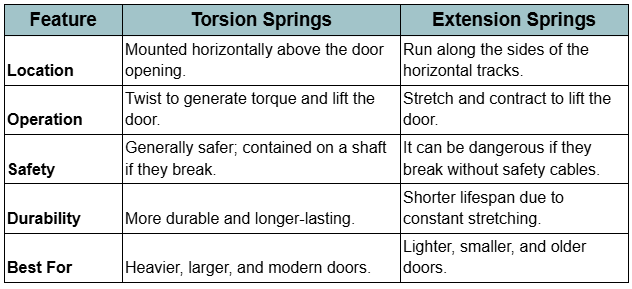
The primary difference between torsion and extension springs lies in how they store and release energy. Torsion springs are mounted on a bar above the garage door and twist to lift it, providing a more balanced and controlled motion. Extension springs are located on either side of the door and stretch to lift it.
This operational difference makes torsion springs a safer and more durable option, especially for heavier garage door types. While extension springs are often found on older or lighter doors, they carry a higher risk if they break, as they can snap and fly off without the protection of safety cables. The size and weight of your garage door are key factors in determining the best choice.
For a more precise comparison:
Key Features That Distinguish Torsion Springs
Torsion springs are considered the preferred option for most modern residential garage doors because of their stability, strength, and smooth operation. These springs function by twisting around a steel shaft. As the garage door closes, the cables attached to the bottom corners wrap around the drums, causing the torsion spring to wind tighter. This winding action stores rotational energy, which is then released to help lift the door with a steady, controlled force.
One of the most significant advantages of torsion springs is the level of balance they provide. Because the force is transferred along the central shaft, the door rises evenly without pulling to one side. This reduces the risk of strain on the tracks, rollers, and panels, helping the entire system operate more quietly and with fewer sudden movements. The improved stability also contributes to the long-term performance and reliability of the garage door.
Torsion springs also offer a higher level of safety. When one breaks, it typically remains secured on the shaft rather than snapping loose. This containment significantly reduces the risk of parts flying across the garage, thereby lowering the chance of injury or property damage. This built-in safety advantage is one reason torsion springs are widely used in newer and heavier garage door designs.
Unique Attributes of Extension Springs
Extension springs are another type commonly found in garage door systems, especially in older or lighter residential doors. Positioned along both sides of the horizontal tracks, these springs operate by stretching and contracting. When the garage door closes, the springs extend to store energy. As the door opens, they contract to release that stored force, helping lift the door upward.
These springs provide effective lifting power, but they function under significant tension and remain more exposed than torsion springs. When an extension spring breaks, it can snap back with force, creating a potential safety hazard. For this reason, safety cables must run through the center of each spring to contain the parts in the event of a failure. These cables are essential for preventing injuries and minimizing damage inside the garage.
While extension springs tend to have a lower upfront cost, they generally do not last as long as torsion springs due to the stretching motion involved in every cycle. This repeated movement can lead to faster wear, increasing the likelihood of needing garage door repair over time. Because of their design, extension springs are typically used on lighter garage doors that do not require the stronger lifting power or enhanced balance offered by torsion systems.
How Design Choices Affect Garage Door Durability
The durability of garage door springs depends significantly on their design, including the materials used and the amount of strength they are built to handle. When springs are appropriately engineered, they can last for thousands of open–close cycles without losing balance or performance. Springs that are not selected correctly may wear out faster, lose tension, or break long before they should. Understanding how different designs influence long-term function makes it easier to compare spring performance and choose the system that best supports your garage door.
Selecting high-quality springs and maintaining them regularly helps extend the overall lifespan of the garage door system. This reduces the chance of unexpected damage and ensures the door continues to operate smoothly. Spring longevity depends on the quality of the materials, the strength of the coils, and the system’s maintenance over time. These factors work together to help your garage door remain dependable for years to come.
Materials Used in Garage Door Springs and Their Longevity
The materials used in garage door springs play a crucial role in determining their lifespan and overall performance. Many high-quality springs are made from oil-tempered steel wire. This steel is heated during manufacturing, which gives it both strength and flexibility, allowing it to withstand repeated twisting or stretching without wearing out quickly. Lower-quality springs are made from weaker metals, which are more likely to rust, weaken, or break early—leading to higher replacement costs.
Some garage door systems use galvanized steel springs, which are coated with zinc to help reduce corrosion in humid environments. While these springs resist rust better, they may not offer the same durability or strength as oil-tempered steel. Homeowners who want longer-lasting springs often opt for stronger, higher-rated metals for improved performance and fewer replacements.
Routine maintenance also supports longer spring life. Applying a proper garage door lubricant every few months helps reduce friction and slow down wear and tear. This simple task helps keep the system running smoothly and can delay the need for both spring replacement and more extensive garage door repairs.
The Impact of Spring Strength on Durability
Spring strength, often referred to as lift capacity, must match the exact weight of your garage door. This is one of the most critical factors affecting durability. Springs that are too weak will overstretch and wear out quickly, forcing them to cycle beyond their intended limits. This not only shortens their lifespan but also causes the opener to work harder, increasing the chance of early motor failure.
Springs that are too strong can also create problems. They can cause the door to rise too quickly or make it challenging to close smoothly. This extra force places unnecessary tension on the top section of the door, hinges, and other parts, which can lead to additional damage. The right spring strength is determined by weighing the garage door and selecting springs calibrated for that specific load.
The number of springs installed matters too. Most residential garage doors rely on a two-spring system for better balance. If one spring breaks, the second spring can temporarily support the door to prevent sudden drops. Using correctly sized and properly paired springs helps maintain safety and ensures longer system life.
Addressing Wear and Tear: Preventing Broken Spring Scenarios
Every garage door spring has a limited lifespan, based on the number of cycles—one cycle meaning one full open and close. Over time, repeated use naturally weakens the metal, leading to wear. Routine maintenance helps slow this process, and early detection prevents unexpected failures. Addressing problems before they worsen protects both the garage door and the opener, reducing the risk of emergency repair costs.
A broken spring is a significant safety concern because the door can lose support instantly. If the door drops suddenly, it can cause injury or damage items stored in the garage. Operating the opener with a broken spring can also strain or destroy the motor. Recognizing early warning signs helps keep the system safe.
Key warning signs include:
- Visible gaps between spring coils
- Corrosion or rust on the spring
- Loud squealing, grinding, or sudden noises when opening or closing the door
- A door that feels unusually heavy when lifted by hand
If you notice any of these issues, it is essential to contact a garage door service technician promptly. Replacing a worn spring before it breaks is safer and more cost-effective than repairing extensive damage after a failure.
The design of your garage door springs plays a significant role in safety, balance, and long-term performance. The type of spring system you choose, along with the quality of the materials, can influence how smoothly your garage door operates and how well it stays aligned over time. Understanding these details makes it easier to choose the correct spring setup for your home and avoid problems that can lead to early wear or unexpected repair needs.
If you are considering a spring upgrade or need help choosing the right replacement, BSD Garage Door has a trained team ready to assist. We work with both torsion and extension systems and can guide you toward the garage door spring that matches your door’s weight, design, and daily use. Your safety matters, and selecting the correct spring is a crucial part of protecting your home. If you’re ready to discuss the best option, feel free to book us online or call us so our crew can help you make an informed choice.
Frequently Asked Questions
You may notice a visible gap in the coils, a garage door that moves unevenly, or sudden loud noises such as snapping or grinding. If the door feels heavier than usual when lifted by hand or drops too quickly, the springs may be losing tension. It’s best to have the system checked to prevent a complete breakdown.
Yes, even if only one spring breaks, the other has likely experienced the same level of wear. Replacing both at the same time helps the door stay balanced and reduces the chance of another spring failure shortly after.
Look for a company with strong customer feedback, proper licensing, and insurance. Ensure they provide transparent pricing before commencing any work and offer a warranty on the repair. These steps help ensure your garage door is handled with care.
Costs vary depending on the type of spring, the size and weight of the door, and local rates. Emergency visits or heavier doors may increase the total amount. Torsion springs generally cost more to replace than extension springs due to design differences.
You can notice a few signs if there is a problem with your garage door. You may hear a loud snap. There could be a break or gap in the coils. You may notice the door opening unevenly. Sometimes, the garage door opener may struggle to lift the door. The door can even slam down fast. If you experience any of these issues, it’s time to call a professional for garage door repair.
No, garage door springs are under heavy tension, and incorrect handling can lead to severe injury. For safety, always have spring repair handled by someone with the proper tools and experience.
Choose a company with strong reviews, full insurance coverage, and transparent pricing. Request a few quotes and compare what is included in each. A dependable company will provide precise details and explain the work before starting.
Torsion springs twist to lift the door and are mounted above the opening, offering smoother motion and better balance. Extension springs stretch along the sides of the tracks to lift the door. They work well for lighter doors but usually have a shorter lifespan. Most modern garage doors utilize torsion springs because they provide greater stability and durability.
Most spring replacements take about one to two hours. The exact time depends on the type of spring, door size, and whether other parts need adjustment. This includes removing the damaged spring, installing the new one, and ensuring the door moves smoothly.
Yes, replacing both ensures the door stays balanced and prevents uneven strain. When one spring fails, the other is usually close to the end of its lifespan as well. Replacing both at once helps avoid future repairs and added labor costs. Because worn or unbalanced springs can directly contribute to dangerous garage door malfunctions, understanding the safety risks is essential. For a broader context on how serious garage door-related incidents can be, you can review historical safety findings in the CPSC safety standard targeting garage door deaths, which highlights why modern doors and spring systems must meet strict safety requirements.