
When you open your garage door, it may seem like the garage door opener is doing all the work, but the real force comes from the springs that manage intense tension to lift the door safely. These springs play a crucial role in ensuring smooth movement, reliable function, and minimizing the need for sudden garage door repairs. Understanding how they operate gives every homeowner the advantage of knowing what keeps their system steady and secure. When a torsion spring or extension spring becomes damaged, it can disrupt your day and create safety concerns that require immediate attention.
Learning how these springs work helps you make informed choices about garage door maintenance and long-term stability. This guide explains the mechanics behind torsion and extension springs, demonstrates how they impact daily performance, and helps you select the spring system that best suits your garage door setup. With the proper knowledge, choosing the ideal spring becomes simple and practical.
Exploring Garage Door Springs in Modern Homes
In many modern homes, the garage door plays a significant role in daily convenience, offering smooth entry and exit throughout the day. Hidden behind this simple operation are the springs that manage a considerable amount of tension. These springs work together with the automatic opener to lift the heavy garage door in a controlled and steady motion. Even though they are crucial, they often go unnoticed—until something goes wrong.
When the springs are not functioning correctly, the automatic opener may overwork, leading to early damage and safety risks. Understanding how essential these springs are helps every homeowner stay ahead of garage door spring repair needs and avoid unexpected disruptions. By recognizing their importance in the overall garage door system, you can support long-term reliability, strengthen safety, and ensure your home remains protected with every open and close.
To explore the basics even further, you can read Understanding Torsion and Extension Garage Door Springs and Choosing the Best Option for a clear breakdown of how each spring supports your daily garage door use.
Overview of Torsion and Extension Springs Used in Garage Doors
Garage doors rely on two main types of springs: torsion springs and extension springs. The primary difference between these springs is the way they store and release energy. A torsion spring sits on a metal shaft above the garage door, creating lifting power by twisting and building up a controlled turning force that helps raise the door smoothly and safely.
Extension springs operate differently. These springs are found on each side of the garage door, next to the tracks. When the door closes, the extension springs stretch to store energy. As the door opens again, that stored energy is released to assist in lifting the door. Both spring types play essential roles in the operation of your residential garage door, whether it is operated by hand or by a motor. Understanding their differences is crucial when planning garage door repair or maintenance, as each spring style comes with unique safety parts and performance features that must be matched correctly to your door.
For a deeper insight into how spring construction affects movement and system efficiency, ‘How Spring Design Influences Garage Door Balance, Durability, and Safety’ offers a helpful, easy-to-follow explanation.
Why Spring Choice Matters for Garage Door Performance
Choosing the right spring system has a significant impact on the daily performance of your garage door. Since the springs carry nearly the entire weight of the door, the design and strength of the spring determine how smoothly the system operates. If the spring type or size is incorrect, or if a spring becomes damaged, the added tension can place unnecessary strain on the garage door opener and other components. This often leads to early damage, higher repair costs, and reduced reliability.
Safety is another critical factor. A broken spring can cause the garage door to drop suddenly, putting anyone nearby at risk of injury and potentially damaging stored belongings. This is why regular garage door maintenance, performed by a trained technician, is essential. The proper spring choice affects how smoothly your door operates, how well-balanced the system remains, how long the opener lasts, and the overall safety you experience every time the door opens.
If you want to compare how different spring systems perform over time, Comparing Spring Performance to Determine the Right System for Your Garage Door shares valuable guidance to help you make the best decision.
How Torsion Springs Operate on Garage Doors
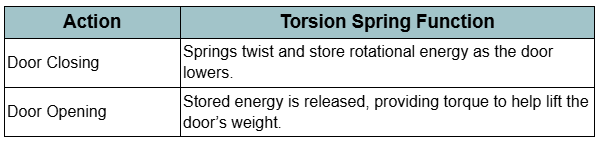
A torsion spring is one of the most essential parts in many modern garage door systems. This spring is mounted on a shaft above the door and uses twisting force to help lift and lower the door with steady control. When the garage door closes, the cables connected at the bottom corners rotate the shaft, which winds the torsion spring tightly and stores energy under controlled tension. This system is designed to handle the heavyweight of the door without putting strain on the opener.
When the automatic opener activates, the stored energy in the torsion spring is released. As the spring unwinds, it rotates the shaft, pulling the cables upward and assisting in lifting even heavier styles, such as a commercial garage door. This setup enables a small motor to exert lifting power far beyond its own capabilities, resulting in smooth and efficient everyday operation. This is the key way torsion springs work in conjunction with your opener to provide stable movement.
For a clearer understanding of how torque and tension interact within spring systems, Physics.info provides an accessible explanation of the science behind spring mechanics.
The Mechanics of Torsion Garage Door Springs
The mechanics behind a torsion spring are rooted in the controlled application of torque. As the garage door closes, the cables trigger the spring to wind tightly around the shaft, storing a large amount of potential energy—similar to winding a precision instrument. This stored tension becomes the driving force used when lifting the door again.
Once the garage door opener signals the system to open, that stored energy is released. The torsion spring unwinds, delivering torque to the shaft, which rotates the drums and winds the cables upward. This action supports nearly all the door’s weight, ensuring a controlled and steady lift while also maintaining system balance. A proper balance is essential, as even small misalignments can significantly impact the door’s performance and the opener’s lifespan.
Because of the high tension involved, any repair or adjustment to a torsion spring should only be handled by a professional garage door service. Their skill ensures the system remains safe and functions as intended.
To learn more about how different spring designs influence mechanical performance, an engineering guide from Additive Plus breaks down spring types and their applications in detail.
Signs Indicating a Broken Torsion Spring
It becomes easier to identify a broken torsion spring once you understand the warning signs. One of the first things many homeowners notice is a loud bang or popping noise coming from the garage. This sound happens when the torsion spring snaps under extreme tension. Once this occurs, the garage door will no longer operate correctly, and even pulling the emergency release will not help lift it. The system loses its counterbalance instantly, leaving the door completely unsupported.
You may also see a visible gap in the spring. A functioning torsion spring is tightly wound as a single coil, but a damaged spring often shows a space of one or two inches. This is a clear indicator of failure, posing serious safety risks, as the spring system no longer supports the entire weight of the door. These signs should never be ignored, as they indicate that the door can no longer move safely or reliably.
Keep an eye out for these signs:
- A loud, sudden noise from the garage.
- A visible break or gap in the coil.
- The opener runs, but the door does not move.
- The garage door feels extremely heavy when lifted by hand.
If you notice any of these issues, it is essential to address them immediately to prevent injury and protect the rest of your garage door system from further damage.
Understanding Extension Springs and Their Role
Extension springs are another system used to balance the weight of a garage door, and they are commonly found in many homes. These springs are mounted above the horizontal tracks on both sides of the door and help make the door feel lighter, allowing it to be lifted manually or with an automatic opener. Although they serve the same purpose as torsion springs, they function differently based on how they manage tension.
When the garage door closes, extension springs stretch and store energy within their coils. As the door opens, they contract to release that stored power, helping move the door upward in a controlled manner. Due to their design, extension springs are typically equipped with safety cables. These cables keep the spring secured in case it breaks, preventing parts from flying across the garage. Understanding how these springs work is essential, especially when planning garage door repair or improving maintenance habits.
Functionality of Extension Springs in Garage Door Systems
The operation of extension springs depends on controlled resistance. As the garage door lowers, these springs extend and collect energy within the coils. Connected through a series of pulleys and cables, the springs distribute lifting force evenly from both bottom corners of the door. This setup ensures the door can rise smoothly along its tracks.
When the garage door opener activates, the extension springs release their stored tension and retract to their natural length. This pulling action moves the cables, helping the door travel upward with steady motion. Each extension spring is calibrated to the exact amount of stretch and pull required to match the door’s weight, ensuring smooth and safe operation.
A key part of garage door maintenance is inspecting the extension springs and their safety cables. The safety cables run through the center of each spring and are crucial for keeping the spring contained if it breaks. These cables reduce the risk of injuries or damage and ensure the system remains dependable during daily use.
Common Issues and Broken Spring Indicators with Extension Springs
Extension springs often show signs of wear before they fail. One of the most common symptoms is jerky or uneven door movement during operation. This usually means one spring has lost tension or has more wear than the other, causing the door to move off balance. You may also notice gaps in the spring coils, or observe that the door appears uneven when opening or closing.
A broken extension spring can be dangerous because the spring may snap back with force, and loose parts can cause damage. This is why safety cables are required—they keep the spring secured in the event that it breaks. When one spring fails, the door loses support on that side, which can cause the door to jam or close unevenly. Regular garage door maintenance helps identify these issues early so they do not turn into bigger safety concerns.
Watch for these warning signs:
- The garage door moves shakily or unevenly.
- You see stretched or separated coils in the spring.
- The door appears lopsided during operation.
- The door drops too quickly instead of closing steadily.
Understanding how torsion springs and extension springs function is essential for keeping your garage door dependable, balanced, and safe. Knowing the differences between these systems enables you to maintain smooth operation and select the most suitable option for long-term performance. Throughout this guide, you learned how these springs work, why they are essential in modern garage door systems, and how the proper spring selection supports reliability, durability, and daily safety. With this knowledge, you can make more informed choices about maintenance, repairs, and overall garage door care.
BSD Garage Door is committed to delivering exceptional artistry, backed by trained technicians who thoroughly understand every component of your garage door system. Whether you need guidance, inspection, or professional support, our team is here to help you keep your garage door operating at its best. If you’re ready for expert assistance or want to schedule a visit, book online or call us today—your garage door deserves trusted care and long-lasting performance.
Frequently Asked Questions
Inspect the garage door for clear signs of wear and tear. You may notice gaps in the coils or hear a loud bang from the garage when the spring snaps under tension. If your commercial garage door moves shakily or unevenly, or the door appears crooked during operation, it’s time to get help. When the automatic opener struggles to lift the door, these issues show that you likely need garage door spring repair. In these cases, it is best to contact a trained professional.
The cost of garage door spring repair varies depending on the type of spring—torsion or extension—and the size and weight of your garage door. Labor fees also influence the final price. Reliable garage door service companies typically provide a precise estimate, so you know what to expect before any garage door spring repair is performed.
You should never attempt to repair a garage door spring on your own. These springs hold intense tension, and a sudden release can cause serious injury. Because of these safety risks, only a trained expert should handle garage door repair or any work involving your spring system.
A torsion spring is installed horizontally above the garage door and uses twisting force to lift the door. Extension springs are installed along the sides and stretch to provide lift. Both springs are essential components of the garage door system, but they operate differently to balance the door’s weight.
Many garage door service companies in Naperville can provide garage door spring repair the same day, often within just a few hours. If a spring breaks and your opener cannot lift the door, you can call for fast assistance, and a trained technician will arrive promptly to perform the necessary garage door repair.
Common signs include a loud bang, a visible gap in the coil, and a garage door that will not open even though the opener runs. The door stays shut because the spring is no longer supporting the lifting parts of the system. When this happens, a garage door spring replacement is necessary.
Garage door extension springs and torsion springs carry intense tension, and improper handling can cause serious injuries or sudden damage. A spring that comes loose can snap back with force, or the door may slam down unexpectedly. These risks make it essential to rely on a professional for any garage door spring repair.
Most garage door spring repair appointments take about one to two hours, depending on the type of spring system your door uses. If other parts need adjustment or replacement, the time may vary. A qualified technician will ensure the system is balanced and functioning correctly before completing the service.
Torsion springs typically last between 10,000 and 20,000 cycles, giving them a longer lifespan than extension springs. Extension springs usually last fewer cycles due to their operating mechanism. Spring longevity also depends on how often you use your garage door, the quality of the parts, and whether you maintain it regularly.
A garage door torsion spring stores energy by twisting as the door closes. When you activate the opener, the spring unwinds and releases torque that helps lift the door’s weight. This controlled motion allows the door to operate smoothly, stay balanced, and place less strain on the opener.